India emerging as aviation gateway between Global South and the world: PM Modi
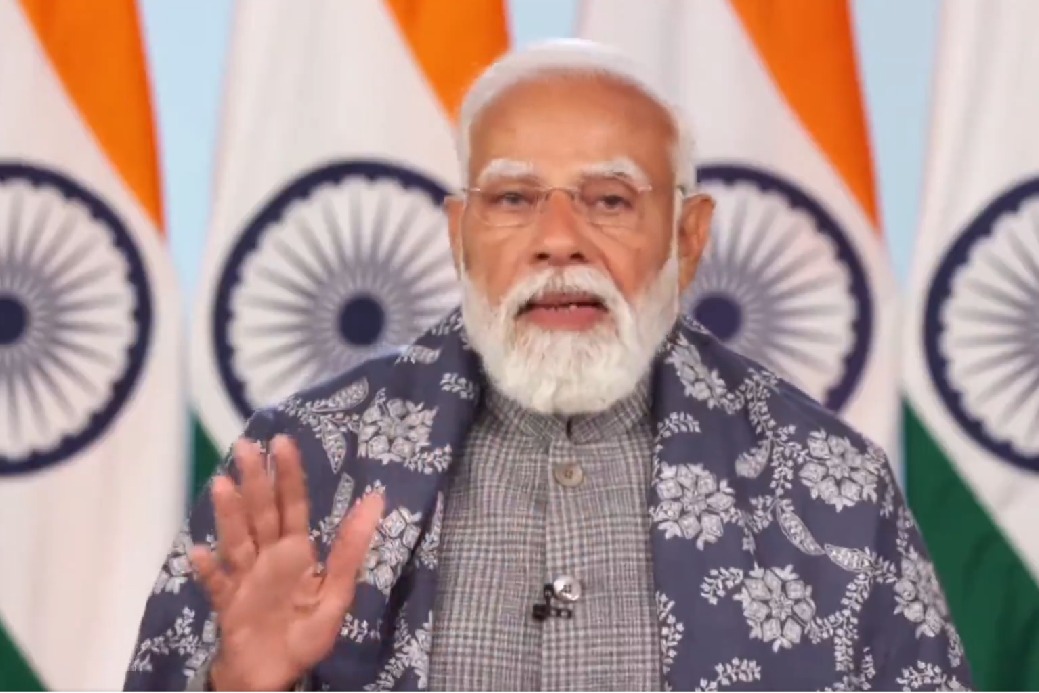
New Delhi, Jan 28 : Prime Minister Narendra Modi said on Wednesday that India is emerging as a major aviation gateway between the Global South and the world, with major opportunities for investors and manufacturers connected with the aviation industry.
Addressing the Wings India 2026 programme at Hyderabad via video conferencing, the Prime Minister welcomed industry leaders, investors and experts, noting that the next era of the aviation industry is full of aspirations and India is emerging as a major player.
He highlighted the vast opportunities India presents in aircraft manufacturing, advanced air mobility, aircraft leasing and pilot training.
PM Modi said that over the past decade, India’s aviation sector has undergone a historic transformation, evolving from an exclusive club to become the world’s third-largest domestic aviation market. He pointed out that passenger traffic has grown rapidly and Indian airlines are expanding their fleets, with more than 1,500 aircraft ordered in recent years.
The Prime Minister underlined that this growth has been possible due to the government’s long-term vision, making air travel inclusive rather than exclusive, with the mission of enabling every citizen to travel easily by air. He emphasised that Tier-2 and Tier-3 cities have been connected with airports, noting that in 2014 India had 70 airports, while today the number has risen to more than 160, meaning the country has built over twice as many airports in just a decade.
Over 100 aerodromes have been activated and, alongside this, the government launched the UDAN scheme to provide affordable fares, he said, noting that as a result of UDAN, 15 million passengers -- around one and a half crore -- have travelled on routes, many of which did not even exist earlier.
Prime Minister Modi remarked that as India advances towards the goal of becoming a developed nation, the expansion of air connectivity is certain to multiply many times over, creating greater opportunities for investment.
He highlighted that by 2047, India is expected to have more than 400 airports, creating a vast network. He noted that the government is working on the next phase of the UDAN scheme, which will further strengthen regional and affordable air connectivity, alongside the expansion of seaplane operations, with the aim of improving connectivity across every corner of the country. Tourist destinations are being upgraded nationwide, and air travel is becoming the preferred choice for an increasing number of people, he added.
The Prime Minister further stated that India is placing strong emphasis on aircraft design, manufacturing, and the aircraft MRO ecosystem. The country is already a major manufacturer and supplier of aircraft parts and has begun producing military and transport aircraft domestically. It is now moving forward in civil aircraft manufacturing as well, he added.
He emphasised that India’s aviation vision is equally focused on air cargo, and the government is working on all necessary regulatory reforms to make cargo movement faster and more efficient. Underlining that India is also set to emerge as a major and competitive transhipment hub, PM Modi urged investors to explore opportunities in warehousing, freight forwarding, express logistics, and e-commerce sectors.

Addressing the Wings India 2026 programme at Hyderabad via video conferencing, the Prime Minister welcomed industry leaders, investors and experts, noting that the next era of the aviation industry is full of aspirations and India is emerging as a major player.
He highlighted the vast opportunities India presents in aircraft manufacturing, advanced air mobility, aircraft leasing and pilot training.
PM Modi said that over the past decade, India’s aviation sector has undergone a historic transformation, evolving from an exclusive club to become the world’s third-largest domestic aviation market. He pointed out that passenger traffic has grown rapidly and Indian airlines are expanding their fleets, with more than 1,500 aircraft ordered in recent years.
The Prime Minister underlined that this growth has been possible due to the government’s long-term vision, making air travel inclusive rather than exclusive, with the mission of enabling every citizen to travel easily by air. He emphasised that Tier-2 and Tier-3 cities have been connected with airports, noting that in 2014 India had 70 airports, while today the number has risen to more than 160, meaning the country has built over twice as many airports in just a decade.
Over 100 aerodromes have been activated and, alongside this, the government launched the UDAN scheme to provide affordable fares, he said, noting that as a result of UDAN, 15 million passengers -- around one and a half crore -- have travelled on routes, many of which did not even exist earlier.
Prime Minister Modi remarked that as India advances towards the goal of becoming a developed nation, the expansion of air connectivity is certain to multiply many times over, creating greater opportunities for investment.
He highlighted that by 2047, India is expected to have more than 400 airports, creating a vast network. He noted that the government is working on the next phase of the UDAN scheme, which will further strengthen regional and affordable air connectivity, alongside the expansion of seaplane operations, with the aim of improving connectivity across every corner of the country. Tourist destinations are being upgraded nationwide, and air travel is becoming the preferred choice for an increasing number of people, he added.
The Prime Minister further stated that India is placing strong emphasis on aircraft design, manufacturing, and the aircraft MRO ecosystem. The country is already a major manufacturer and supplier of aircraft parts and has begun producing military and transport aircraft domestically. It is now moving forward in civil aircraft manufacturing as well, he added.
He emphasised that India’s aviation vision is equally focused on air cargo, and the government is working on all necessary regulatory reforms to make cargo movement faster and more efficient. Underlining that India is also set to emerge as a major and competitive transhipment hub, PM Modi urged investors to explore opportunities in warehousing, freight forwarding, express logistics, and e-commerce sectors.