US will seek 'separate' semiconductor tariff pacts for countries: Official
Washington, Jan 17 : US President Donald Trump's administration will seek "separate" semiconductor tariff agreements for "separate countries," a U.S. official said, after the United States and Taiwan reached a deal on the chip levies this week.
"Separate agreements for separate countries," a U.S. official said, responding to a question from Yonhap News Agency regarding whether the deal with Taiwan would set a standard for chip tariffs or the U.S. would conduct separate negotiations with other countries for the sectoral tariffs.
The official's remarks came a day after the U.S. Commerce Department released a fact sheet about a trade and investment deal between the United States and Taiwan, which outlined a bilateral agreement on semiconductor tariffs.
According to the fact sheet, Taiwanese companies building new U.S. semiconductor capacity may import up to 2.5 times that planned capacity without paying sectoral duties during the approved construction period.
Taiwanese companies that have completed new chip production projects in the U.S. will still be able to import 1.5 times their new U.S. production capacity without paying sectoral duties.
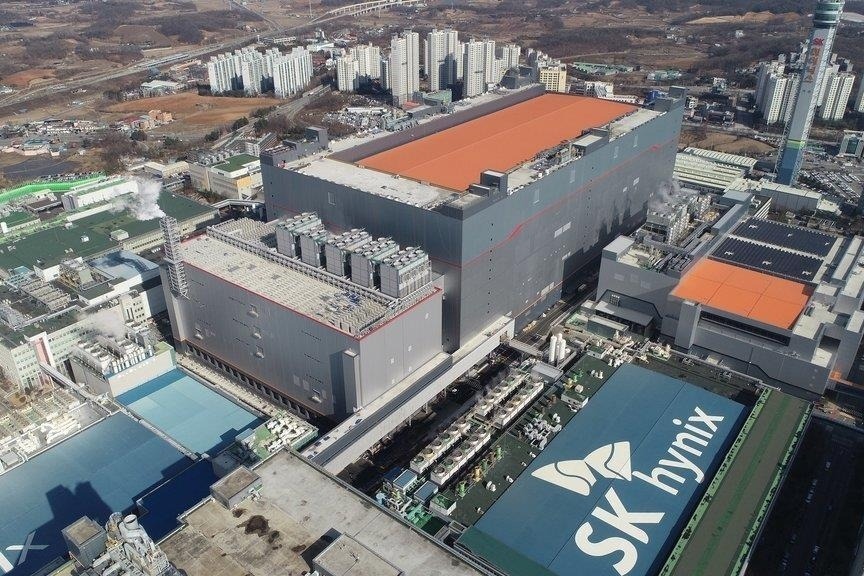
The agreement on the chip tariffs raised questions over whether it will set a standard for chipmakers from other countries, including South Korea.
On Wednesday, Trump signed a proclamation to levy a 25 percent tariff on certain semiconductors for artificial intelligence (AI), which are imported into the U.S. and then reexported to other countries.
The White House has also said that Trump may impose "broader" tariffs on imports of semiconductors and their derivative products.
The president has rolled out various industrywide tariffs, invoking Section 232 of the Trade Expansion Act of 1962, a law that provides the president with the authority to adjust imports into the U.S. when he determines they threaten to impair national security.
South Korea's top trade envoy assessed the Trump administration's proclamation on semiconductor tariffs to have a "limited" impact on local chip makers.
Trade Minister Yeo Han-koo made the assessment upon his arrival home, following a six-day trip to the U.S., amid Washington's concerns over a recent revision to a South Korean law aimed at addressing false and fabricated online information.
"The first-stage measure announced is focused on advanced chips from NVIDIA and AMD, and excludes memory chips, which are key export products of local companies," Yeo told reporters at Incheon International Airport.

"Separate agreements for separate countries," a U.S. official said, responding to a question from Yonhap News Agency regarding whether the deal with Taiwan would set a standard for chip tariffs or the U.S. would conduct separate negotiations with other countries for the sectoral tariffs.
The official's remarks came a day after the U.S. Commerce Department released a fact sheet about a trade and investment deal between the United States and Taiwan, which outlined a bilateral agreement on semiconductor tariffs.
According to the fact sheet, Taiwanese companies building new U.S. semiconductor capacity may import up to 2.5 times that planned capacity without paying sectoral duties during the approved construction period.
Taiwanese companies that have completed new chip production projects in the U.S. will still be able to import 1.5 times their new U.S. production capacity without paying sectoral duties.
The agreement on the chip tariffs raised questions over whether it will set a standard for chipmakers from other countries, including South Korea.
On Wednesday, Trump signed a proclamation to levy a 25 percent tariff on certain semiconductors for artificial intelligence (AI), which are imported into the U.S. and then reexported to other countries.
The White House has also said that Trump may impose "broader" tariffs on imports of semiconductors and their derivative products.
The president has rolled out various industrywide tariffs, invoking Section 232 of the Trade Expansion Act of 1962, a law that provides the president with the authority to adjust imports into the U.S. when he determines they threaten to impair national security.
South Korea's top trade envoy assessed the Trump administration's proclamation on semiconductor tariffs to have a "limited" impact on local chip makers.
Trade Minister Yeo Han-koo made the assessment upon his arrival home, following a six-day trip to the U.S., amid Washington's concerns over a recent revision to a South Korean law aimed at addressing false and fabricated online information.
"The first-stage measure announced is focused on advanced chips from NVIDIA and AMD, and excludes memory chips, which are key export products of local companies," Yeo told reporters at Incheon International Airport.