Delhi chokes as AQI slips into 'severe' zone
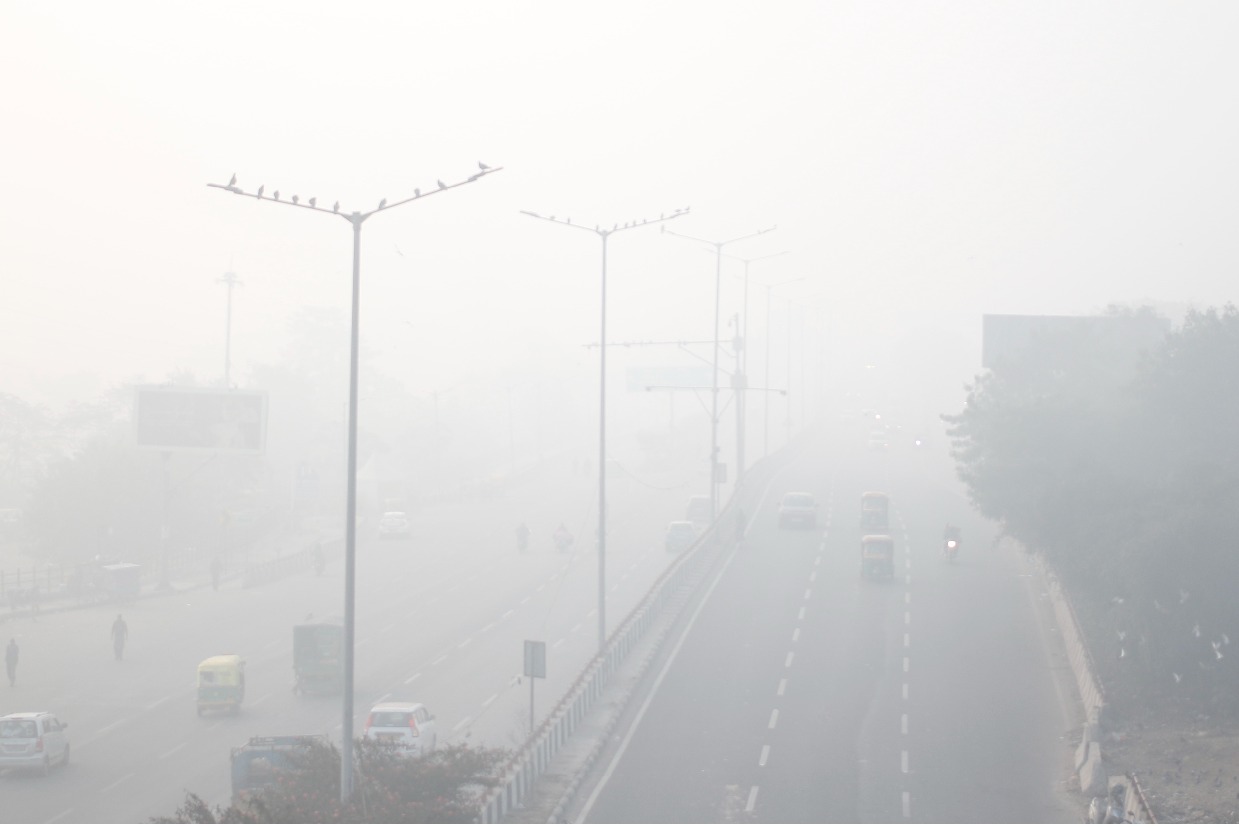
New Delhi, Dec 31 : Delhi's air quality deteriorated further on Wednesday, slipping into the 'severe' category as the Air Quality Index (AQI) was recorded at 408. Dense fog and heavy pollution sharply reduced visibility across the national capital.
Several monitoring stations across central and south Delhi recorded 'very poor' air quality levels. AQI readings stood at 370 at Mandi House and India Gate, 340 at Mathura Road and Sarojini Nagar, while Rashtrapati Bhawan and ITO both recorded an AQI of 357.
Conditions were even worse in several other parts of the city and adjoining areas, where air quality entered the 'severe' zone.
Noida recorded an AQI of 418, Karol Bagh 408, Rajouri Garden 406, Mundka 472, Patel Nagar 410, Chanakyapuri 405, Vasant Kunj 402, Saket 430 and Vikaspuri 472.
Lajpat Nagar touched the upper end of the scale with an AQI of 500, while IGI Airport recorded an alarming 512. Patel Nagar was also listed at 406 in another reading.
The foggy conditions coincided with worrying projections from air quality forecasters, who cautioned that pollution levels in the national capital region are likely to worsen significantly as the year draws to a close.
Under the Air Quality Index classification, air quality is categorised as good (0–50), satisfactory (51–100), moderate (101–200), poor (201–300), very poor (301–400) and severe (401–500).
The India Meteorological Department (IMD) has forecast the persistence of dense fog conditions through Wednesday and urged commuters and travellers to remain cautious while on the roads.
Low visibility also disrupted air travel, prompting advisories from airlines and airport authorities.
IndiGo warned passengers of possible delays and cancellations at Delhi and several other airports across northern India, stating that it was closely monitoring weather conditions and adjusting operations to minimise disruption.
Air India, too, issued a travel advisory and announced advance cancellations of select morning flights that were likely to be affected by fog-related visibility issues.
Weather conditions across north India continue to be influenced by an active Western Disturbance.
The Meteorological Department has issued a yellow alert for dense fog and light rain in parts of Punjab and Chandigarh, where rainfall is expected to continue until January 1.
Several locations across the region reported near-zero visibility amid cold, damp and hazardous conditions, adding to travel woes and public health concerns.

Several monitoring stations across central and south Delhi recorded 'very poor' air quality levels. AQI readings stood at 370 at Mandi House and India Gate, 340 at Mathura Road and Sarojini Nagar, while Rashtrapati Bhawan and ITO both recorded an AQI of 357.
Conditions were even worse in several other parts of the city and adjoining areas, where air quality entered the 'severe' zone.
Noida recorded an AQI of 418, Karol Bagh 408, Rajouri Garden 406, Mundka 472, Patel Nagar 410, Chanakyapuri 405, Vasant Kunj 402, Saket 430 and Vikaspuri 472.
Lajpat Nagar touched the upper end of the scale with an AQI of 500, while IGI Airport recorded an alarming 512. Patel Nagar was also listed at 406 in another reading.
The foggy conditions coincided with worrying projections from air quality forecasters, who cautioned that pollution levels in the national capital region are likely to worsen significantly as the year draws to a close.
Under the Air Quality Index classification, air quality is categorised as good (0–50), satisfactory (51–100), moderate (101–200), poor (201–300), very poor (301–400) and severe (401–500).
The India Meteorological Department (IMD) has forecast the persistence of dense fog conditions through Wednesday and urged commuters and travellers to remain cautious while on the roads.
Low visibility also disrupted air travel, prompting advisories from airlines and airport authorities.
IndiGo warned passengers of possible delays and cancellations at Delhi and several other airports across northern India, stating that it was closely monitoring weather conditions and adjusting operations to minimise disruption.
Air India, too, issued a travel advisory and announced advance cancellations of select morning flights that were likely to be affected by fog-related visibility issues.
Weather conditions across north India continue to be influenced by an active Western Disturbance.
The Meteorological Department has issued a yellow alert for dense fog and light rain in parts of Punjab and Chandigarh, where rainfall is expected to continue until January 1.
Several locations across the region reported near-zero visibility amid cold, damp and hazardous conditions, adding to travel woes and public health concerns.