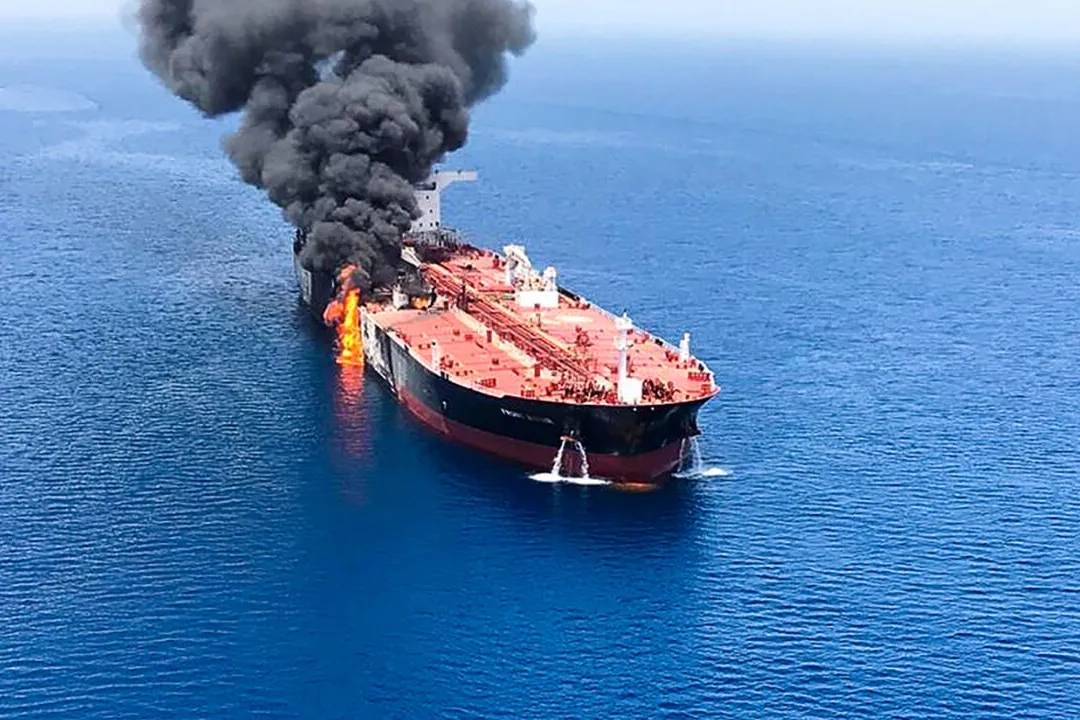
Washington, Dec 18 : The Trump Administration on Thursday sanctioned 29 vessels tied to a covert petroleum shipping network. Among them are companies and operations linked to India involved in moving Iranian oil worth hundreds of millions of dollars.
The US Department of the Treasury said the action was aimed at cutting off revenue streams used by the Iranian regime to support terrorism and other illicit activities.
Principal Deputy Spokesperson Tommy Pigott said the United States was acting “to stem the flow of the Iranian regime’s revenue used to support terrorism and other illicit activities.”
Treasury said the sanctions include a network of companies and vessels operated by Hatem Elsaid Farid Ibrahim Sakr, an Egyptian businessman, as well as multiple shipping firms active in countries including the United Arab Emirates, India, the Marshall Islands and Panama. Sakr’s companies were linked to seven of the 29 vessels named in the action.
“This action further constrains Iran’s ability to export petroleum and petroleum products through obscure and fraudulent mechanisms,” Pigott said.
India-linked entities named include the Barbados-flagged vessel Flora Dolce, owned and managed by India-based Rukbat Marine Services Co, which has transported millions of barrels of Iranian fuel oil since April 2025.
The Panama-flagged Auroura, owned and operated by India-based Golden Gate Ship Management, was cited for transporting millions of barrels of Iranian petroleum products, including naphtha and condensate.
Another vessel, Ramya, operated and managed by India-based Darya Shipping Private Limited, was said to have transported more than 100,000 barrels of Iranian petroleum products since September 2025.
According to the Treasury’s Office of Foreign Assets Control (OFAC), the sanctioned vessels are part of Iran’s so-called “shadow fleet,” which exports Iranian petroleum and petroleum products through deceptive and fraudulent shipping practices.
The vessels and associated management firms have been involved in transporting Iranian crude oil and products, including fuel oil, bitumen, naphtha, and condensate.
Treasury said these vessels were part of a broader system in which companies are often created solely to own and manage individual ships, masking beneficial ownership and enabling sanctions evasion. Many of the vessels have been linked to years of Iranian petroleum shipments, including significant volumes in 2025.
In a separate statement, Treasury Under Secretary for Terrorism and Financial Intelligence John K. Hurley underscored the administration’s broader objective.
“As President Trump has said repeatedly, the United States will not allow Iran to have a nuclear weapon,” Hurley said. “Treasury will continue to deprive the regime of the petroleum revenue it uses to fund its military and weapons programs.”
Treasury said the latest designations were imposed under Executive Order 13902, which targets Iran’s petroleum and petrochemical sectors. Since President Trump resumed office, his administration has sanctioned more than 180 vessels involved in shipping Iranian petroleum and petroleum products, driving up costs for exporters and reducing the revenue Iran receives for each barrel sold.
US targets Iran oil network, names India-linked shipping firms