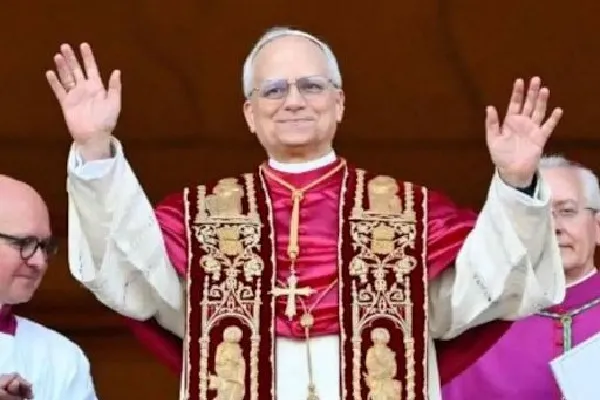
Robert Francis Prevost, born in Chicago in 1955 to parents of Franco-Italian descent, made history on May 8, 2025, by becoming the first American elected as pope, taking the name Leo XIV. His election as the 267th pontiff was notably swift, with the conclave lasting just three sessions and 24 hours, and he secured a strong majority of votes from the cardinals. He follows Pope Francis, the first Latin American pope, who led the Church for 12 years before his passing in April 2025.
Prevost’s early life was rooted in Chicago’s South Side, where he attended St. Mary of the Assumption School and Church. He holds both U.S. and Peruvian citizenship, reflecting his deep ties to both nations. Ordained as a priest in 1982, he joined the Order of Saint Augustine and began missionary work in Peru at the age of 30, dedicating decades to serving marginalized communities. His compassionate leadership was further demonstrated during his tenure as a parish pastor and seminary educator in Trujillo, Peru, and as Prior General of the Augustinians from 2001 to 2013.
In 2015, Prevost became Bishop of Chiclayo, Peru, a position he held until 2023. That year, Pope Francis appointed him as Prefect of the Dicastery for Bishops and President of the Pontifical Commission for Latin America. He was elevated to cardinal in 2023 and became a cardinal-bishop in 2025, shortly before his election as pope. Throughout his ecclesiastical career, Prevost has been recognized as a moderate, shaped by Pope Francis’s focus on social justice, and is known for his humility, hands-on missionary work, and advocacy for the underprivileged.
Pope Leo XIV’s election marks a significant shift in the Church’s global outlook, highlighting the growing influence of the Americas and the importance of outreach to marginalized communities. His leadership has been met with notable political and social responses, including public congratulations from U.S. President Donald Trump. In his first public words, Pope Leo XIV emphasized unity and hope, assuring the faithful that "evil will not triumph; we are in the hands of God." His background as a missionary, educator, and leader in both the Americas and Rome positions him as a bridge-builder for the world’s 1.4 billion Catholics and signals a new era of global inclusivity for the Catholic Church.
First American Pope Elected, Here’s What You Need to Know!