India has taken a series of stringent actions against Pakistan following a terrorist attack in Jammu and Kashmir, significantly impacting Pakistan’s economy. The attack, which occurred on April 22 in Pahalgam, led to the deaths of 26 tourists. In response, the Indian government, led by Prime Minister Narendra Modi, convened a meeting of the Cabinet Committee on Security and announced several major decisions.
Among these was the suspension of the Indus Waters Treaty. India also cancelled visas granted to Pakistani nationals and instructed them to leave the country immediately. Medical visa holders were given a deadline to exit India by April 29.
Additionally, India has decided to drastically reduce diplomatic staff in both countries and expel military attachés from Pakistan. The South Asian Association for Regional Cooperation (SAARC) visa exemption scheme for Pakistani citizens has been suspended. Except for those with legal clearance to remain, all other Pakistani nationals were ordered to leave, and the Attari border is to be sealed by May 1.
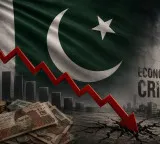
These escalations have had an immediate and adverse effect on Pakistan’s financial markets. On Thursday, the Karachi Stock Exchange's key index, the KSE-100, plunged significantly, closing nearly 2 percent lower. Analysts cited that the economic crisis in Pakistan is being further exacerbated by these geopolitical tensions.
In what appears to be a show of strength, Pakistan reportedly conducted a missile test off the coast of Karachi today. It is believed that either the Shaheen-III or Babur missile—both capable of reaching major cities in India—was tested. Simultaneously, India successfully tested a medium-range surface-to-air missile from its latest guided missile destroyer, INS Surat.
Speaking on the financial implications, Sana Taufiq of Arif Habib Limited and other market analysts stated that the ongoing tensions between the two countries have severely hurt market sentiment. Furthermore, the International Monetary Fund (IMF) has revised Pakistan's projected economic growth for the 2025 fiscal year downward from 3 percent to 2.6 percent, adding to the economic pressure.