Seoul, Feb 15 : North Korea is expected to observe a longer Lunar New Year holiday this year, as it immediately follows the national holiday marking the birthday of the late former leader Kim Jong-il.
North Korea observes a one-day Lunar New Year holiday, which falls on Tuesday this year, shorter than South Korea's three-day holiday.
This year's Lunar New Year falls on a day after the late leader's birthday on Monday, following Sunday, giving North Koreans a three-day holiday.
Generally, North Koreans observe the new year according to the Western calendar, while South Koreans celebrate the Lunar New Year more extravagantly, reports Yonhap news agency.
The socialist North Korea initially renounced the traditional Korean holiday as a feudal vestige before reinstating it in 1989, along with the other traditional holiday of Chuseok, under the Kim Jong-il regime.
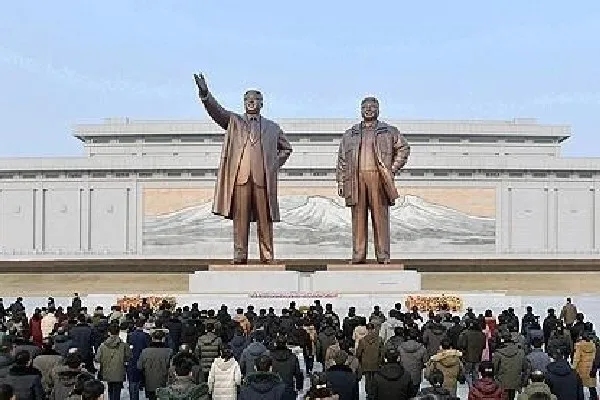
North Korea now uses the traditional holiday as an occasion not only to honour families' ancestors but also to celebrate the achievements of its two late leaders, including state founder Kim Il-sung, and to bolster allegiance to the current leader, Kim Jong-un.
On Lunar New Year, North Koreans typically visit the Kumsusan mausoleum in Pyongyang, where the bodies of the two late leaders are enshrined, or their statues across the country to lay flowers.
Restaurants remain open and busy with diners during the holiday season, as travel to other regions or hometowns is restricted and allowed only with permission.
Meanwhile, in South Korea, outbound traffic congestion was expected to peak on Sunday as more people head to their hometowns on the second day of the Lunar New Year holiday.
The nation will mark the major holiday, known as Seol, on Tuesday, with the holiday period beginning over the weekend and running through Wednesday.
Traffic caused by cars on outbound routes was expected to be the heaviest between noon and 1 p.m. and ease from around 8 to 9 p.m., according to the state-run Korea Expressway Corp.
As of 8 a.m., a drive from Seoul to the southeastern port city of Busan, about 330 kilometres away, was expected to take about six hours and 10 minutes, while a trip to Daegu, some 240 km southeast of Seoul, was expected to take 5 hours and 10 minutes.
Travel times heading toward Seoul were relatively shorter, taking 5 hours and 10 minutes from Busan to Seoul and 4 hours and 10 minutes from Daegu to Seoul.
The agency estimated that some 5 million vehicles would travel nationwide on Sunday, including 450,000 cars leaving the greater Seoul area and 380,000 heading toward it.
North Korea observes longer Lunar New Year holiday this year, combined with late leader's birthday
Advertisement