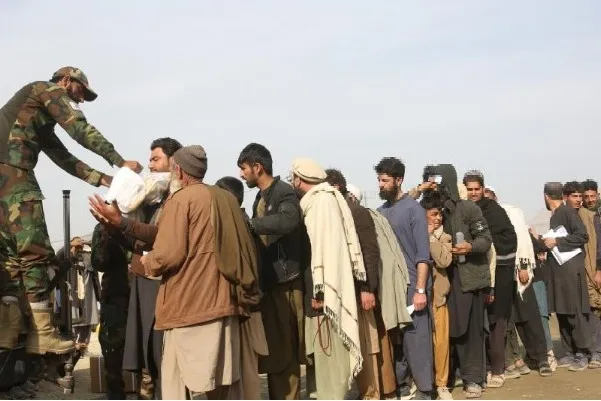
Washington, Jan 17 : Senior US lawmakers have warned that lapses in the security screening of Afghan evacuees following the 2021 withdrawal from Kabul could leave the United States vulnerable to further attacks.
Participating in a Senate Judiciary subcommittee hearing on border security and immigration, Republican lawmakers accused the Biden administration of misusing humanitarian parole to allow large numbers of Afghan nationals into the United States without proper background checks.
Top Republican Senator John Cornyn said the administration carried out a “haphazard evacuation and parole of more than 70,000 Afghan nationals” following the fall of Kabul, arguing that “many of the 70,000 Afghan nationals that were paroled in the United States were unvetted and allowed to travel throughout the United States even when we had derogatory information or concerns about them.”
Cornyn linked the issue to the November 26 shooting in Washington that killed National Guard Specialist Sarah Beckstrom and critically wounded Staff Sergeant Andrew Wolfe, allegedly carried out by an Afghan national who entered the United States through the Operation Allies Welcome parole programme.
“How did this murderer come to be let in the United States in the first place?” Cornyn asked, adding that Americans “deserve to live free from fear that individuals with ties to terrorist organisations are roaming about our country.”
Senator Josh Hawley said standard screening procedures were ignored during the evacuation, claiming that “there was no vetting that was properly done,” with interviews and background checks either waived or conducted under extreme time pressure.
He alleged that tens of thousands of Afghans were admitted with little clarity about their identities, whereabouts, or potential security risks.
Craig Adelman, Deputy Inspector General for Audits at the Department of Homeland Security, said DHS “did not have a formal screening and vetting process at the start of the OAW process.”
He testified that critical biographic data was often missing, incomplete, or unreliable, including names and dates of birth.
Adelman told lawmakers that nearly 1,300 Afghan nationals were allowed to enter the United States before their biometrics were collected, and that more than 30,000 lacked formal identification documents, a figure later cited as about 36,000.
He said DHS also paroled individuals later determined to pose national security concerns.
Arne Baker, the senior official performing the duties of Inspector General at the State Department, said his office had issued 11 reports on Afghan screening, vetting and relocation.
He noted “a high level of identity fraud” in Afghanistan and said the department struggled with unreliable data and inconsistent criteria for identifying at-risk individuals during the evacuation.
Michael Roark, Deputy Inspector General at the Department of Defense, testified that not all available military and intelligence data was used during vetting.
He said analysts later identified dozens of Afghans in the United States with derogatory information drawn from Defense Department databases, warning that gaps in information-sharing created potential security risks.
Democratic lawmakers rejected the claim that Afghan evacuees were broadly unvetted and accused Republicans of politicising a tragedy. Senator Alex Padilla said that “each and every Afghan refugee had to complete multiple rounds of extensive vetting,” both before and after arrival, involving the intelligence community, the State Department, DHS, and the FBI.
Padilla said it was “a pure fabrication” to suggest that the Afghan refugees were not vetted. She strongly argued that the Washington shooting reflected failures in post-arrival monitoring and mental health support rather than screening. He urged lawmakers not to “condemn the many for the inexcusable act of one person.”
Senator Dick Durbin echoed that view, saying it was irresponsible to use a single incident to stigmatise an entire community. He warned that portraying Afghan allies as a collective threat risked undermining US credibility with partners who supported American forces overseas.
US Senators warn Afghan evacuee vetting gaps risk attacks
Advertisement