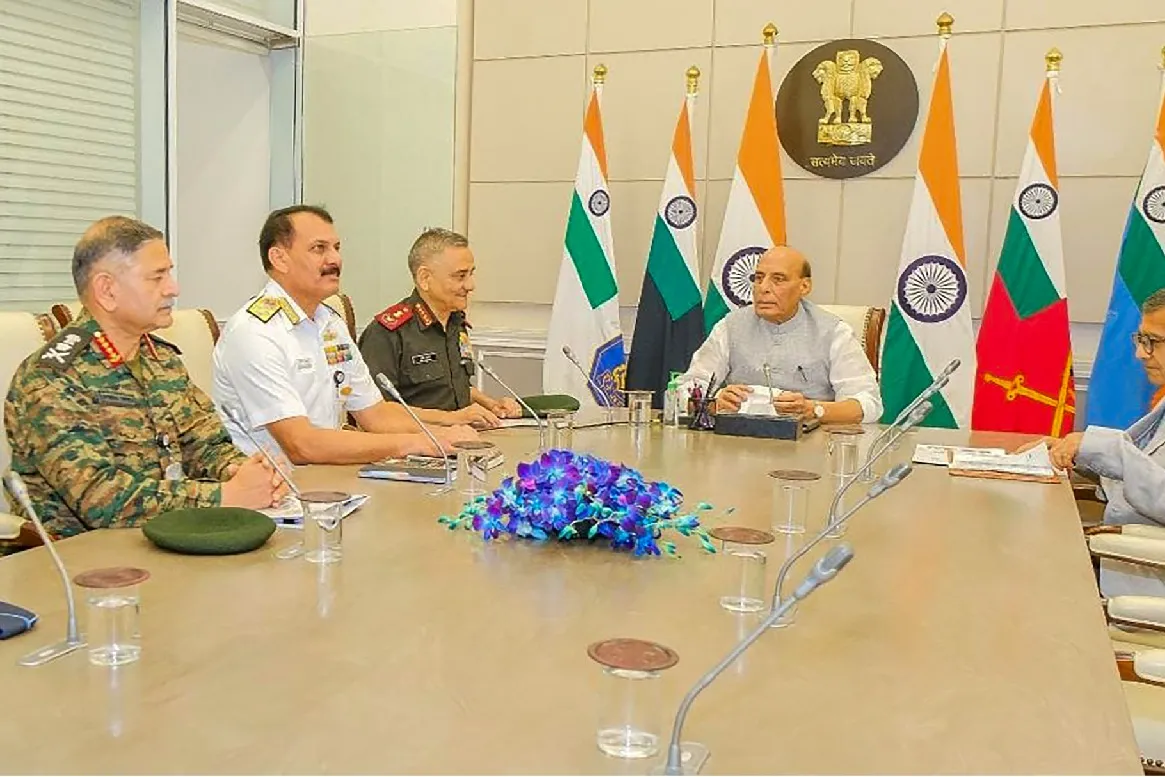
Amidst recent tensions with Pakistan and the continuation of Operation Sindoor, the central government has delegated significant powers to the Indian Armed Forces. In a major development, the Army has been granted special powers to procure essential weapons. According to officials, the Defence Acquisition Council (DAC), headed by Defence Minister Rajnath Singh, recently approved Emergency Procurement (EP-6) powers amounting to approximately ₹40,000 crore for the three services.
Under this sixth phase of Emergency Procurement, the Army, Indian Air Force (IAF), and Navy will not only be able to enhance their existing weapons stockpiles but also replenish depleted ones. The government had previously approved five such emergency procurement phases — the first four during military tensions with China in eastern Ladakh, and the fifth for counter-terrorism operations.
Under the latest directive, the armed forces can bypass traditional long-term procurement procedures and instead finalize multiple fast-track contracts, each worth up to ₹300 crore. These contracts can be executed under both capital and revenue expenditure heads. “Contracts must be finalized within 40 days, and delivery of the equipment must be completed within a year. These powers will be exercised by the Vice Chiefs of the three services,” an official stated.
These new powers will allow the armed forces to rapidly acquire advanced weaponry such as missiles, long-range precision strike systems, surveillance and high-accuracy munitions, kamikaze drones, and anti-drone systems. It has been indicated that for the current fiscal year, capital and revenue procurements under this scheme are each capped at 15% of the overall defence budget allocation.
During the recent skirmishes with Pakistan, the Indian Air Force employed a range of precision-guided weaponry, including BrahMos supersonic cruise missiles co-produced with Russia, Israel-made Crystal Maze-2 and Rampage air-to-ground missiles, Spice-2000 guided bombs, and French-made SCALP cruise missiles and HAMMER precision munitions. The IAF also deployed Israel-manufactured Harop and Harpy kamikaze drones.
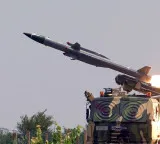
Similarly, the Army utilized launcher-based systems like SkyStriker and precision artillery shells such as Excalibur extended-range munitions for targeted strikes. In multi-layered air defence operations, the forces employed a variety of missiles, including the Israel-developed Barak-8 medium-range surface-to-air missiles and indigenous Akash missiles.